The Daughter Also Rises

It isn’t unusual for a new year to inspire reflection. Though it sucks when it gets caught on your blazer.

We are the masters of our own stories as human beings and our understanding of the world around us rests, in part, on how we rationalise where we’ve been. In other words, how we remember and understand our lives as they have been so far. This is true of all humans, not just trans people, but it takes on a special significance for us sometimes because when you get right down to it, our pasts are what sire the discrimination and othering that we face.

For the last two weeks as some of my entries here have indicated, this has been on my mind. I’ve done a lot of reflecting on where I came from and how I understand myself as a trans woman. It is enough for me to say that I just know this is the right course, naturally. I cannot argue with the results: my future is now impatiently awaited, my energy feels boundless at times, I can actually envision myself doing something worthwhile in my future. I cannot, and do not argue with how I feel and the rightness of it all. Yet I still feel compelled to write about this, to tell the story such as it is so far.

Perhaps it is just that after having subjected myself to so many cis narratives of late, I want to put my genuine story of trans womanhood out there to counteract the lies.

Perhaps this is just something I personally need to do on the eve of my return to college, a day that marks the beginning of a life I want to live.

[I should emphasise that this is my story and mine alone. Any comparisons to certain cliches about trans life are to better illustrate my own story by contrast, not to diminish anyone else’s. If it is to be taken as any sort of instruction on trans identity it is to say we are not all the same, but neither are all trans people like me.]

So, now to the beginning…

I was a child of the 80s and born into the infamous brown bricked projects of the South Bronx where I spent the first 4 years of my life before moving to condo in a slightly less poor neighbourhood. The stories most often told about trans people where a five year old child adamantly refuses to play with toys of a certain gender stereotype is not my story. I have virtually no memory of those years except the faintest clip of me running down a hallway in my pyjamas and then staring at a line of rat poison in a corner thinking it was candy.

Given that I’m still here I don’t think I ate it.

But Barbie was never my thing. She still isn’t. I loved me some trucks and Lego. I never once felt like I was playing with the wrong toys. Indeed,  I almost can’t blame my father for not seeing my transition coming. When I was a wee one I used to get all excited at Bigfoot, the large Ford monster truck, and quickly took to Nintendo NES like a duck to water. Or a duck to hunt, mayhaps. It wasn’t until I got a bit older that he began to call my masculinity into question.

In retrospect I was one hell of a tomboy and I have no regrets about this. Why should I? The story that is most often told about us involves little trans girls insisting on playing with dolls and walking around in mom’s high heels. Does this stuff happen? Of course it does. Even I played with mum’s shoes. But it is not the only definitive trans story. It certainly wasn’t my story. For my money Lego are the coolest toys ever for all genders. I felt comfortable with how I was raised, in that respect. Despite my father’s abusiveness I had a more or less enviable childhood. I thought nothing of the fact that there were times when I was little that I’d look in mirrors with my penis tucked between my legs.

There are phrases that are often bandied about in regards to us, such as “woman trapped in a man’s body” or vice versa. Even I’m guilty of using that to describe myself. But that is not my phrase, it only very imprecisely describes how I felt, and it is but the faintest approximation of many trans lives I’ve read about and know personally: including my own. I never felt trapped in my body, even as it masculinised. I didn’t like it, certainly, and I hated my facial hair but I didn’t shave it out of laziness. But trapped? No, not quite. Even to this day, with everything I now know and despite the occasional envy I find myself feeling of certain cis women or other trans women, I do not feel trapped in this form. I’m more grateful for it than anything else, oddly.

To say I was trapped in a man’s body would be a very old fashioned and ciscentric way of putting it. A way to help the uninformed more easily understand my situation. In reality I came to understand the fluidity of gender identity, gender presentation and an understanding that my body did not limit me to one way of life or one way of being. How I came to that knowledge was part of a long and often circuitous journey that took place mostly in high school. How and why did that happen? Because little Quinnae lived in her own world.

If there was ever any indication that I didn’t feel quite right with the world around me it was my intense desire to escape from it. All children are imaginative, and often beautifully so. But in my case there was a clear desire to utterly disassociate from the world around me as often as possible. For me, every day brought a new symphony of imagination where I was something else. I loved my stuffed animals loads and often played with them, pretending they were real, but their roles in my life were not to attend a tea party, no. They were players in my orchestras and students in my classrooms, with instruments and implements I had made using paper and spaghetti noodles. Oh how I loved spaghetti noodles…

I would use them to reinforce everything I made from paper, to keep it together.

Then there was the paper. Paper everything. I put traffic lights and street signs all over the house and pretended to drive around it. I built mockups of paper cities combining elements of London and Seattle and New York into my vision of a super metropolis. Over and over and over again for years. I built the Mushroom Kingdom. I built Ancient Rome. I destroyed them with earthquakes and space invasions and built them right back up again. I begged dad to get me a whiteboard so I could teach my classes with it and one day he obliged me by getting a huge one he’d found one day in the garbage. After that I just went to town on teaching. I used the textbooks from all my classes at primary school and unsurprisingly I aced all of my tests without studying.

There’s nothing unusual about a child flying away into their fantasies and their imaginations, and maybe that’s the point of all of this. So many trans narratives as articulated by cis people focus on what’s “wrong”. Being imaginative isn’t gendered, of course. Some psychiatrists might say I wasn’t really trans because I pretended to be James Bond for much of my middle school years.

You should see the cool gadgets I made. The cell phone car remote, the laser watch, the gadget laden briefcase. I did it all. I played James Bond, M (male and female), Moneypenny, and the Bond girls and villains. I was a one girl show with every fantasy I enacted, often talking to myself in a variety of voices. I still smile and flush with embarrassment all at the same time when I look back on it all… and also feel a sense of pride in all the laminated ID cards and credit cards I made.

There are moments now when I lament what I might have missed had I been raised as a girl, and yet looking at what young women are made to go through in their youth I feel almost glad I missed it, for I might well have hated it all.

My style these days is feminine and formal, the caricatures of myself that often accompany my posts are a good approximation of my button down blouse and skirt style. But I think I’d have been an overalls-girl as a kid and would’ve resented anything that compelled me to wear a dress.

I often feel ashamed to admit that as if that makes me somehow illegitimate as a trans woman. Yet I know in my heart it doesn’t. My road was unique and to see myself as lesser is to accept the cis stereotype that all trans people must be just so. So I was a tomboy, sue me. I live under the whim of no psychiatrist and I thank the goddess every day that this is so, for I know that some might look askance at me were I to relate this tale of my childhood. Some would have said that I was not truly trans for that, or that I might have been ‘just a crossdresser’, and sought to make my life a misery.
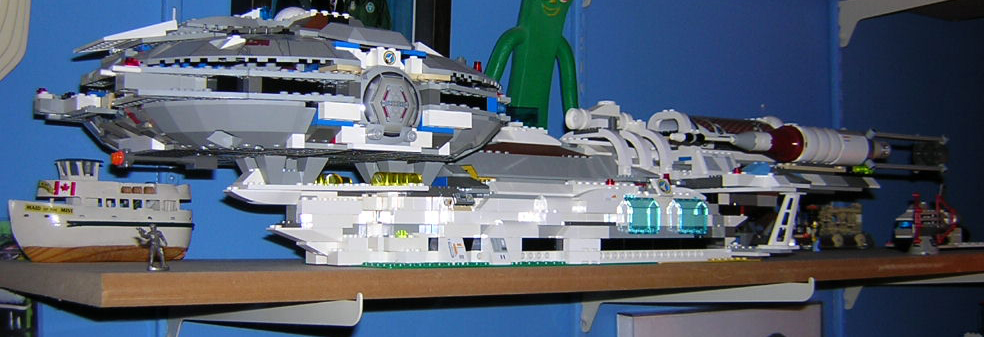
I made that. ...When I was 20
I made that… when I was 20.

Yet what I got out of my childhood was a zest for independence, and I know I’d never have been happy had I accepted the whims of those who thought they knew better.

But something else happened in my childhood as well.

We are often told, usually by transphobic cis women, that because trans women didn’t grow up as girls they cannot truly know what it’s like to be a woman. Needless to say, I always disagreed with that, though I found it hard to put my response into words until I really sat down with my childhood and gazed back through that dusty looking glass. When I was a kid I internalised the social messages being doled out for both sexes. While my parents insisted I was a boy and I believed them, I still looked with curiosity at what was meant for the girls at school and came to internalise other things as well. Things that would eventually come to make me hate myself.

I saw how my father treated my mother, how he hit her, yelled at her, belittled her. I saw her weep and I saw her appear to be powerless against the man who was eight inches taller than her. I remember my own father would berate me for crying or talking about my own feelings and how men ought not express such things. I saw the way girls were portrayed on television in the 90s as squealy, fashion obsessed herds in rhinestone and pink and wondered “is that what being a girl is supposed to be?” I saw all of my favourite TV shows and their male protagonists and figured men were naturally more interesting than girls with their one-dimensionality.

I internalised these things and so much more, as many young women do. It took its toll by the time I reached high school where I finally began to come to grips with the absurdity of gender stereotypes, and especially how wrong and demeaning the ones about women were. But it was entirely the truth that by the time I was 15 I hated myself for reasons I didn’t fully understand. My desire to transition was born sometime in the 10th Grade, though I wouldn’t really know it for what it was until many years later. But it had nothing to do with the fact that I was desirous of Barbie dolls or pretty dresses. It had everything to do with how I was feeling, and it was granted its first utterances when I went on feminist rants in History class against young men who asserted, ever so politely, that women who dressed a ‘certain way’ should take responsibility for their rapes.

In those moments I felt personally threatened for some reason by those words, and when the women behind me cheered I felt a sense of kinship that I didn’t understand at the time either.

This was the dawn of my awakening as both a woman and a feminist. The realisation, slow as it was, that there was power in fighting. I didn’t want to suffer in silence, I wanted to act, and to speak up, to stand and take charge of my life in the face of injustice. It’s just one more thing that doesn’t fit with the agreed upon story, for we are ever supposed to relish our silence and passivity. In my case it was that I was coming to realise such passivity was yet another lie about womanhood I’d been told. Women could stand and fight.

It was during this time that I wanted to really get to know other women, and I never fully admitted to myself why I felt more comfortable walking to the train station with a young woman than with a group of men, why I felt like a third wheel in every last group of boys I ever travelled with, or why I felt much happier at a mixed gender lunch table than even the one for nerdy guys. I did, however, using my socialisation come up with a particular rationalisation for it.

I wanted to date all of those women. At least, that’s what I told myself. After all, my father was insistently raising me to “go get ‘em tiger” and I had a penis, therefore I must be a man. Despite everything I felt and was beginning to realise about how bullshit all of that was, I knew nothing else. Happiness must come from dating and sex. Combine this with the rush of hormones that the onset of puberty brings and, well, disaster would strike oh so many times as I struggled to figure this all out.

I admired many women for many reasons. I admired Captain Janeway for her strength and leadership (and a voice I secretly and desperately wanted). I admired some of my female teachers for their skills. I admired some of my classmates for being something I couldn’t, or being smarter than I. I even admired several for their sense of fashion, wearing things I wished I could try, that I was inexplicably drawn to. In all of these cases the admiration was platonic and at times, even noble. Yet I funnelled it into sex for fear of what it meant. I could only be attracted to them in the strict sense. I could desire nothing feminine and even female role models were bad because, well, they’re female and I wasn’t, right?

Even as my father denigrated my female friends for being ugly and telling me to have more confidence in myself so I could go after “hotter” women I felt something was deeply in turmoil inside of me. I thought it was teenage angst over not getting girls, something I surely wasn’t alone in. But that was how I made myself understand it. As I reflected on all the sappy letters I wrote and my hysterically emo diary entries, I came to realise I never really fancied any of those young women or my teachers. I did not want to sleep with them, I wanted to be them. The way I had ruthlessly objectified them and shunted all of my feelings into pure carnal attraction was born of socialisation. It wasn’t just from how I was raised but from how my male peers kept trying to reinforce the idea that cross gender friendships were impossible, along with hosts of other signals.

Even through all of this some might say that this only would add up to me being a gender non conforming male. But again, there was a self-hating that emerged from all of this which was, I realised, me hating my feminine self.  It was all due to how I had been raised to see women and womanhood. When I spoke out for it, as I did in class, I felt at peace with myself. When I forced myself to deny it and to act as male as possible, I loathed myself. The simplest way to describe it is that I felt more in line with my true self the more I identified as a woman, not just as an effeminate or nonconforming male.

Even in high school when I was largely oblivious to this and thought “transvestites” were jokes I played games like Knights of the Old Republic and Morrowind to rush into the alternate realities I had so craved as a child. “Why am I always a woman in these worlds?” I asked myself. Eventually, my friends asked as well. So did my father, quite angrily.

By the time high school had rolled around I’d grown out of my desire to build fantasy out of paper, crayons, and noodles, but still craved escape. So it was that I did, into every RPG I could get my hands on. I still distinctly remember the one time I tried to play a man in Morrowind I just couldn’t continue after barely reaching level two (in a game where it’s possible to get over level sixty). But then I rolled my short brown haired Breton woman and went on my merry way, fireballing and slashing my way across Vvardenfell. So it was too in every Star Wars game where I had a choice.

Suddenly, I realised, a woman could be the hero and could kick ass.

It seemed such a trivial and elementary thought. But I was raised in a sheltered environment. I was terribly asocial, my friends were the aforementioned stuffed dolls, and my parents did little to change this. I was brutally bullied in middle school and was a touch misanthropic by the time I got to high school. Through it all I’d been raised on certain media images and by my fathers’ insistent stories about the way the world was.

Which was why it took Star Wars and Star Trek to show me women could own. And it was why it took role playing games to show me that I liked being a woman who could own. I grinned with a strange sense of pride when my Knights of the Old Republic character got to call another one a “sexist pig.” A little stab of rebellion, the same way I felt back in history class when my female teacher gave me a warm smile when I stood up against the sexism of other students. It felt so right and it felt so just, despite everything I was raised with.

Each time I didn’t feel like a feminist male, I felt like a woman who was standing up for herself and her dignity. I ask cis women to remember how it felt for them as they may have felt many a time in their youth, how terrible it must have been to reckon with the fact that they were raised to hate themselves as women, or to see themselves as lesser. That they were raised with preconceived notions about who they were supposed to be that ensured they had to expend enormous amounts of energy to just untangle the lies and discover who they really were.

I had to do the same thing.

It was so strange that it took video games to cause this awakening, and perhaps it was fitting that my father constantly threatened to break the CDs and engaged in Jack Thompson-esque rantings about the evils of gaming. Yet I persisted and became comfortable with female characters, honestly lamenting other games where I didn’t have a choice. By senior year there was an abundant sense I didn’t want to acknowledge. The reason I played as females every chance I got was because I was a male every day of my life, why should I waste time in epic fantasy worlds pretending to be who I wasn’t?

I never had the courage to say that, instead coming up with circumlocutions about how I felt more in touch with my feminine side or how the female character looked better, all those old chestnuts.

I didn’t want to say, in part because of all that shame that still stalked me:

“I am a woman.”

Stay tuned for Part II, coming soon to a monitor near you.

Out in the Rain: Gender Activism and its Discontents

Last time on Nuclear Unicorn I took down an MRA’s  transphobic blog post on trans peoples’ lives. What was most striking about the article were things I didn’t even get to discuss despite the prodigious girth of my response; chief among them was the fact that the author’s entire supposed purpose in writing it, his thesis, was left largely unproven. It became clear that he was following a very classic pattern that cis people indulge in when criticising trans people publicly. It’s a classic transphobic syllogism:

I don’t like x. I also don’t like trans people. Therefore x causes and enables trans people.

This idea afflicts most gender activism as trans people of various types tend to be excluded from it or cast as some kind of bogeyman in various gender studies narratives. Some genderqueers, androgynes, and other non-binaries rail against transsexual people for, as they see it, playing into the gender binary. The execrable Julie Bindel, and feminists like her, follow a similar pattern. She doesn’t like patriarchy and proscriptive gender roles, therefore they cause the existence of the trans people she so loathes. Christians don’t like modernisation, pluralism, diversity, and what they see as decadence, therefore all of those things cause the existence of the trans people they so despise. For Jack Donovan, his hatred of feminism and of women in general, which occludes all else, leads him to believe that trans people could only be a feminist conspiracy.

The mutual exclusivity of all of these theories should be proof enough that they’re wrong and bear little relation to reality. Their purpose is to buttress the ideologies of the speaker rather than actually address the concerns of trans people or discuss our place in society.

The fact that Donovan barely addressed his own thesis and spent a great deal more time whacking trans people with tired old bigotry and inapt comparisons is a reminder of what the real purpose was in writing the article: to be transphobic. His performance in the comments speaks for itself. When a trans woman challenges him he is reduced to a bingo-card ready script. He objectifies her, calls her ugly, calls her a man, and then essentially devolves into gibbering cursing every other sentence while simultaneously claiming he faces lots of discrimination as a white cis man.

All very droll, as Sir Humphrey Appleby might say.

I have to be entirely honest here. In addition to feeling mistrustful of radical cis feminists and most cis feminist websites, I also feel threatened by most MRAs. The Spearhead article is Exhibit A in my case for this. One could easily write it off as one radical that shouldn’t define the movement, but given that Spearhead is linked to so approvingly on many Men’s Rights websites, that the comments were all praising Mr. Donovan for the piece (except a couple of trans people who came in to question it and two others), and that the Spearhead is cheerfully endorsed by fantasist conspiracy theorists, it’s hard for me to trust MRAs or their sincerity.

Like many cis radfems, MRAs have a major centering problem. They define the “What about the menz?” fallacy. Indeed, the entire movement is built around that premise. But the simple reality is that everything is about them and their needs.

Take for example this thread from Reddit. I’m a bit biased, of course, since the thread in question links to your humble correspondent’s journal but it is very instructive to consider what happened there. The thread was meant to call attention to the hypocrisy of radical feminists in regards to their transphobia. But out of 34 comments over 20 of them were written by MRAs or people arguing with them about their “but what about how feminism treats men?” points of view. For context the forum in which this was published is called Equality, and is largely devoted to getting male and female (almost exclusively cis) gender activists to talk to each other. Thus the question of feminism’s problems vis a vis (cis) men is addressed daily.

By contrast this was the first post about trans issues for a while and one of a tiny number discussing trans women’s relationship with feminism. Despite this, the cis men couldn’t help but make it entirely about themselves and their needs. For my money, this was the best, and most telling comment by one of the MRAs about my piece:

“it discussed penises. it was therefore partially about men. Men who changed their gender, but men (or at least, formerly men) all the same.”

I don’t need to dwell on what’s wrong with that statement or why it’s transphobic. What’s most important to consider right now is that it’s appropriating, trying to shoehorn my argument into a pro-Men’s Rights agenda, never mind that you have to completely mangle trans women’s identities to do so. It is a reminder of the fact that when it comes to cis centering MRAs are as bad, if not worse, than a lot of cis feminists.

Every discussion about feminism must be about them and their cis male concerns. Never mind that trans women are routinely silenced and marginalised, rarely spoken of, and often spoken for in absentia and very poorly.

“Not supporting people who were born biologically male, and infact demonizing them and trying to strip rights from the non-females, is exactly what feminism is all about.”

Here’s a clue, sweetie. I am not you. Nor am I a man. Do not include me in your chest-beating ranting. Please. Seriously.

It ought to go without saying that I do not support discrimination against men, and my writing record does speak for itself on this matter. I believe that feminism must have a good relationship with as many men as possible. Just as Patriarchy could only operate with the consent of large swathes of women, the solution to Patriarchy must come with the cooperation of many men. I also never bought into the arguments about the power of the penis, whether used against pre or non-operative trans women or cis or trans men.

But the fact that so many cis male MRAs got huffy about the fact that I didn’t make half the article about them was quite significant. I spent 100% of my energy discussing trans women’s relationship to feminism because it doesn’t get talked about very often in the public square. So to have that public discussion derailed by cissexist MRAs was incredibly telling. That only one other known feminist chimed in to give her support or say anything at all was equally telling.

This is what leads to my complicated relationship with gender activism and my mistrust of MRAs in particular stems from the fact that they don’t notice or care about their erasure of trans people, never mind the men they routinely leave out or refuse to speak for directly (men of colour, disabled men, etc.). This is not to say that feminism has reached the mountaintop, only that more and more feminists appear to be acknowledging that there is a mountaintop to reach.

There is quite a long road ahead, for certain. Feminism at least has the tools of liberal liberation ideology to work with that make it a much easier fit with the cause of trans rights. As discussed last time, Men’s Rights being largely a reactive movement of the privileged, draws its intellectual inspiration from the right.  Halting steps forward are being taken by feminist groups. More and more are at least operating from the basic premise that trans women are women and trans men are men, and that all other gender identities on the spectrum are also to be respected. That MRA websites like the Spearhead are 50 years behind on this is a reminder of why trans people should be very wary of that movement.

Yet before feminists begin patting themselves on the back for how tolerant they are, as white liberals are often wont to do, it would be instructive to consider the higher level failures that feminism has stumbled into of late. Feminists should think long and hard about Recursive Paradox/Genderbitch’s withering criticisms there, and ask themselves why such a strong willed and beautifully passionate activist could be turned off to feminism, to the point of downright despising it. The answer matters a great deal.

In many ways, the failure she talks about isn’t even especially “high level”. The fact that I feel tempted to call it that simply because the feminist in question that she lambastes is self proclaimed trans positive is a terrible reminder of how far we have to go. Much like the cis men in the Reddit thread, Melissa McEwan centered her own feelings and ideas in a discussion that had everything to do with real life discrimination against trans people, and in that sense there’s nothing ‘high level’ about this failure at all. It’s the same thing, except with a smile on its face.

It is not enough to mouth the words about trans people, and to say that you accept and tolerate me. That comes with a great deal more responsibility than many feminists are willing to accept it would seem. Many recoiled when we challenged them for their public mourning of noted transphobe and radfem writer Mary Daly. Feministe got it right with this excellent obituary written passionately by a cis feminist who told a complete story of Ms. Daly’s life and how her journey with feminism was tainted by it.

That is called accepting responsibility and being accountable for the history our movement has, which is often very chequered and complex.

This excellent comment by another cis feminist is still another example of how to get it right while still remaining committed to feminist principles. But far too many other cis feminists clearly didn’t even try, thinking that footnotes or lofty claims to ‘starting a debate’ would mollify the many trans people who were offended at endless pictures of Mary Daly with that goddamned axe of hers (or labrys, as one pedant corrected) and the glowing obits she received from many feminists who claimed to be trans-positive.

All of the comments there are worth reading, of course. The words of little light, an excellent trans woman blogger are powerful as always.

Without a doubt, MRAs are still trying to pass Trans 101. Many don’t even realise they have to take the course. Feminists are fucking up, by and large, at the 301 level. Annoying and even angering but still a sign of (oh so slow and iterative) progress of a sort. But if you stop there and disown us for those failures, then it’s all for naught. As Melissa McEwan and others must come to understand, you cannot have it both ways. You cannot be trans-positive and still wallow in cis privilege when it is convenient. You have to give up some of your idols, yes, because you ought to believe that the higher commitment to human rights, to women’s rights, and to equality matters much more than burnishing the image of Germaine Greer.

Individuals like her need not be feminism.

Feminism is more than a person, or a building, or a blog, or a Women’s Studies Department, or a single march, or a Guardian column. You have to let go of that sense and remember that feminism is about all of us, and that feminism is liberation. It is a higher ideal that should always transcend the worldly and human failings of individuals, and thus you should be unashamed to call them out for their failures and acknowledge their role in the movement. There need be no contradiction in any of this. If we are to be better than our enemies then we must own our failures, not make cheap excuses or go on privileged tirades about “the important things.”

Fighting bigotry is the important thing.

Celebrating it or eliding it is the antithesis of that.

Don’t let feminism go the way of Men’s Rights; an insular, reactionary, ideology that spends its time boxing with shadows and kicking the oppressed while they’re down.

Be feminist.

Blunted Spearhead: The Cis Man’s Burden

(Trigger Warning: If you find yourself triggered by blatant transphobia, transmisogyny and un/misgendering it’s best to leave this post, for today.)

Generally speaking whenever one comes across flagrant transphobia, particularly of the hopelessly cliched variety, it’s best to not waste your time deconstructing it. It’s just another way we, and other people who constantly have to bat away a barrage of clichéd bullshit, are oppressed and held back- compelled to waste our time justifying ourselves and giving 101 lessons to people who probably won’t care to come within a hundred miles of “Getting It”™. But occasionally it serves a useful purpose, and this is one of those times. Our post comes to us from the mystical world of Men’s Rights Activism, a sort of bizarro world where men are oppressed and live under a Matriarchy where women have all the privileges. It’s kind of like the Underdark. That’s the short, brutally unfair summary.

As you will see, however, the bizarro world nature of it all takes stranger turns that surprised even me.

Generally speaking, men face gendered problems in society and some iniquities. The Men’s Rights movement, however, has faithfully copied the feminism it so loathes by ensuring that it’s chiefly the Straight White Cis Able Men’s Rights Movement, thus conveniently ignoring a broad swathe of male social problems. It began as a movement of white, middle to upper class men (ostensibly representing men who had been punted into the lower classes due to onerous alimony payments) and largely remains so. Unlike feminism which, despite its routine and ceaselessly maddening failures, at least is now in the process of trying to fix that, MR remains blissfully oblivious.

One of their more important sites, Spearhead, is a reminder of why this is. Unlike feminism which has adopted many core left wing values, Men’s Rights activism comes largely from the right, complete with its disdain for respect and any notion of dignity (often expressed through very overdone whining about political correctness, as you will see here). Spearhead’s manifesto contains this little gem, in case you missed the point that this site wasn’t for sissy nanny boo boo lefties:

“But “movement” might be the wrong term, because in our contrived and artificial society the meaning of that word has come to be associated with dilettante radicals with bullhorns and giant puppets making appeals on behalf of sea turtles or some other exotic cause. … Rather than engaging in status displays of conspicuous righteousness, we are raising our voices in defense of ourselves, our families and our fellow men, which is a far more ennobling thing to do than raiding weasel farms or getting involved in intertribal disputes halfway around the world.”

Catch both the dig at PETA (fine) and the casual racism? Okay, okay; I don’t need to break this down too much. This merely sets the stage for the grand opus of fail that is to follow. It is to failure what La Boheme is to opera. And thus, the curtain rises on this article written by one Jack Donovan…

“On November 29, 2009 Los Angeles Times sportswriter Mike Penner died of an apparent suicide. In 2007 he announced that he was a transsexual and began writing as Christine Daniels. In October 2008 he returned to work dressed in male clothing and began writing as Mike Penner again.”

We see where this is going, isn’t it? We’re in the car and suddenly you see Failtown looming in the distance, through the parted fog, like an even more menacing Racoon City. But no, this is going to far more magical places than just Failtown, my friends.

“The point of this essay is not to speak ill of the dead.”

No, the point of this essay is to utterly trash the dead and savage the living.

“It is to draw attention to yet another way that feminism and cultural Marxism are doing harm to men.”

Do you see the mystical and magical place we’re going yet? I’ll give you a hint, remember that Men’s Rights is Bizarro World radical feminism.

“The incident seemed particularly timely to me because this past weekend I helped some young men move out of a crazy transsexual’s home where they were renting rooms. This former construction worker was open about the fact that he was taking black market hormones, and his behavior was extremely erratic.”

While one could argue that it’s entirely possible he’s talking about a trans man, the tone he takes here and elsewhere in the article makes it patently clear that he’s wilfully misgendering here. So, let’s be clear. Cis man starts going on about a “crazy transsexual” who’s on “black market hormones” and… what else?

“He had a history of suicide attempts. He owned several guns, and had made a plea to someone in the house to hold his ammunition—because “he couldn’t trust himself.” “

I see, that sounds like a terrible situation, Mister Donovan, assuming you’re being entirely faithful in your recounting of the story. But surely, as you are quick to say about the cis white men you care so deeply for, one individual does not define an entire people yes?

“This was no surprise to me. I associated with a wide range of pre and post-op transsexuals when I worked in New York City and San Francisco nightclubs in the 1990s. As with all things there were exceptions, but generally drag queens, trannies and transsexuals in all stages of transition were not well. They were often addicted to drugs, had been diagnosed with mental disorders or chemical imbalances, and many had at one point routinely engaged in prostitution. The erratic, emotionally unstable, borderline schizophrenic behavior my friends described to me was almost exactly what I had experienced myself in the past.”

Oh.

Well I guess we are going there. So, let’s pick this apart. In this paragraph he’s basically admitting that he’s stereotyping, that he took a biased sample of trans people by looking only in nightclubs, he actually called them trannies in an article that is supposed to be professional, and engages in a bit of ableism by stigmatising people who are not neurotypical and further implying that transsexualism is such a mental disorder or evidence of others.

I was going to do this thing with the article where I had a running tally of fail but I knew that if I kept up with it I’d just have to put in a .gif of a counter spinning wildly out of control at the end of the piece.

Like many cis people who regard the trans people that work in such places they assume that their “crazy” desire to “change sex” is what’s causing all of their ‘problems’ when in reality the locus of all of these issues lies in the oppression that society imposes on all trans people. Many trans people end up doing sex work precisely because no one else will hire them, and their families have disowned them. This is tragically, depressingly common.

Do I even have to point out how such could very easily lead to depression and quite a few other unpleasant things?

But hey, maybe I’m wrong. You had something else you wanted to add, Mr. Donovan?

“A guy I knew a year ago was dating a pageant-winning local drag queen who had to be committed.”

Oh, see? It’s okay. He knows a guy. A guy who, like, totally dated a drag queen. Because drag queens=transsexuals=all trans people=transgender=genderqueer=whatever the fuck his cis privilege needs the term to mean. Inasmuch as he can’t even tell the difference between any of those groups, and that he fell for the utterly basic fallacy of assuming that drag queens are representative of the entire trans community and are all transsexual women, it just shows he has no place writing anything like this.

“Even in liberal communities where transsexuality is relatively accepted, suicidal behavior among known transsexuals is over or around 20%.

‘See? Trans people commit suicide lots! Just like Christine Daniels! That’s proof they’re troubled. Now watch this really sweet transphobia I’m going to crap out guys, it’s gonna be killer.’

“To be clear, I am not discussing female-to-male(FTM) transsexuals, but only male-to-female(MTF) transsexuals. Female transsexuality is a different ballgame; it seems to be almost entirely a feminist tom-boy fantasy and it is difficult to separate from feminist politics.”

Golly, these guys just love themselves some trans women don’t they? Why is it that trans men tend to always be pushed to the wayside and dimly regarded when a cis person who hasn’t done a lick of reading about trans experience and gender issues wants to start writing their theories all over us in crayon?

Rest assured though, trans men, Mr. Donovan has your number:

“At some point I will write something titled “Chaz Bono is Still a Fat Chick,” but today is not that day.”

‘Today is not the noble day on which I bravely write something that I saw scrawled in the men’s toilet stalls earlier.’

Still with me? We’re just getting warmed up here.

“I have met a few convincing post-op transsexuals. Some of them were Pilipino ladyboys who started hormones early; some were simply “pretty” boys who were naturally delicate and soft-featured.”

Again, this fills up a bingo card by itself. Aside from the flagrant transmisogyny that comes with judging by appearance, he also uses the term ‘convincing’ in that snide way that deftly implies deceit. Don’t believe me?

“They lived as women and bedded straight men (watch out fellas). As passable women they were also highly promiscuous. I knew of at least one who married a guy who paid for the expensive transition, and then dumped him later. It is worth noting, too, that many of these individuals occasionally engage in deceptive behavior, “hiding” their birth sex from potential sexual partners. It’s not just a comedy cliché. It happens, and it’s ethically reprehensible.”

‘Watch out fellas’? I can’t even make a joke about this, this is just evil. He’s actually trying to cultivate trans panic, a defence which has seen cis men get off murder charges when they just couldn’t control their murderous impulses after discovering someone they slept with was trans. (This is a running theme in Men’s Rights, by the way: they will say cis men are totally wicked awesome, but sex and murder are like their kryptonite; cis men just can’t help themselves and suddenly become a mere twitching lump of evo psych! Men’s Rights: Empowering men.)

Earlier I said that he was ‘deftly implying’ deceit, well now he just comes right out and says it. We’re deceivers, luring poor innocent cis men into paying for ‘sex change operations’ so that we can conquer the world with our newfound hoo has. It’s just another way women are trying to defraud men! (Money is a huge concern in the Men’s Rights movement. All women are gold diggers trying to get men to pay for all their girly shit, that kind of thing.)

“The majority of MTFs, however, are not even remotely convincing as women. Like Penner (as far as I can tell from this photo), many of the trannies I’ve known and seen have been rather tall men.”

A quick note here to Andrea James, Lynn Conway and all other trans people who use the MTF/FTM thing: this is why you should drop it. Look at who is using it. Trans man/trans woman works and doesn’t mislead people into thinking you’re essentially a certain sex or gender. That, however, suits Donovan’s purposes just fine. Consider that a man who hates us and even calls us “trannies” in an article that had to pass editorial review finds “MTF” an acceptable and ‘useful’ term.

It’s time for us to put it to bed.

Also, this quote highlights Donovan’s commitment to not speaking ill of the dead wherein he rubs his arse on Christine Daniels/Mike Penner’s grave and asks the audience to help him objectify hir. Stay classy, Spearhead.

“At 6 foot 6, my pal’s landlord was only ever going to pass while sitting down in the corner of a very dark bar. A lot of them you can easily pick out a block away.”

Let’s not delve too deeply into several inconvenient facts (that there are plenty of cis women over 6 feet tall, that lots of models who comprise a cis beauty ideal are over six feet tall, and that lots of trans women over that height still gain conditional cissexual privilege) for a moment and examine a fundamental truth:

A cissexist will not know someone is trans if they aren’t visibly gender variant in any capacity. Ergo, for all he knows, he could be surrounded by us. He’s premising the entire article on a few trans people he’s met in nightclubs. Aside from dehumanising them when they are among the most heavily marginalised and vulnerable people in the United States right now, he’s made a simple and idiotic mistake of presuming this is a representative sample of all trans people. But at any rate, his cissexism isn’t remotely connected to the struggles faced by the trans people he encountered in NY and SF, nope; they’re just “crazy.”

“While I’ll assume that some FTMs end up passing as women and live long, happy lives, I have a hard time believing they represent a majority of the males who identify as transsexual and undergo some sort of gender transformation.”

‘because this is, like, so totally inconvenient to my argument, man.’

The misgendering is so common that I really can’t keep pointing it out or I’ll double the length of what promises to be an already ponderous article.

“Why does our federal government now recognize it by giving these men special protected status with the new “hate crimes” law?”

That he puts hate crimes in quotes not long after drumming up trans panic and encouraging his (almost exclusively cis male) readership to actively fear us shows again how far out of touch he is. Having heard cis men grant utterance to this “nightmare” they have, seeing it played for laughs on the insistently unfunny Letterman Show, and having had to have a MRA tell me that “transgenders” actually “rape [cis] men” and that he’d “fucking kill” any woman he slept with that didn’t turn out to be cis… forgive me if I’m extremely and passionately unsympathetic to the following bit of clichéd conservative whining:

“Why isn’t this considered child abuse? How long will it be before even asking these questions will be considered illegal “hate speech?” “

‘Because, hey, guys what’s hateful about making you all paranoid about trans women and calling them names that they’re usually called when someone is trying to kill them? Effin liberals and feminists, spoiling our fun, right?’

“Why, in some communities, are very confused young boys being encouraged to identify as girls—virtually ensuring that they’ll spend the rest of their lives in therapy, that they’ll never feel normal or comfortable in their own skins?”

‘I mean, heaven knows, I’m never going to let them feel normal or comfortable. And remember guys, watch out! They’re crazy and might fool you! With their black market hormones!’ *spooky fingers*

Let’s just leave aside the fact that ‘feeling normal and being comfortable in their own skin’ (something I feel every day since I came out) is not his fucking call to make.

“The only thing that “proves” any theory of transsexuality is a feeling expressed by transsexuals that they were born “the wrong sex.” The available physical evidence strongly suggests that they were born male, and that they only thing wrong with them is in their heads.”

‘The available physical evidence I just pulled out of this Cheetohs bag, that is! Mmm… crunchy.’

A trip to the blog of Zoe Brain, who earns her surname with everything she writes, and who valiantly stood alone against Sauron’s Hordes in the comment section would be instructive in considering why that paragraph is ten kinds of wrong. The neurological and biological evidence and research that she has catalogued and ably summarises everywhere she can is ample enough proof of the utter falsehood of this statement.

But beyond that, it is not his entitlement to have any sort of biological proof that I exist. I do. The depression, self-loathing, and suicidal tragedies he’s shamlessly appropriated for his agenda are the direct result of hatred like his, not anything intrinsic to being trans.

“The idea that they were born “the wrong sex” is impossible to even contemplate without wandering into metaphysical territory”

‘And that is too adult a matter for the readers of this blog so I will not make your tiny heads explode. MEN RAWK!’

“If a man takes hormones to look more like a woman, or a woman takes hormones to look more like a man, we accept it and legally recognize the switch. If a man takes hormones to enhance his own natural masculinity, we call it immoral and we’ve made it illegal. We call him a cheater and threaten to put an asterisk beside his name.”

I actually howled at this. The way he’s worded it makes  it sound like some kind of national tragedy that we discriminate against super rich cis male athletes who’ve doped up on steroids. Pity the millionaire men, but heap your scorn upon those uppity and crazy trannies!

He might as well compare this to the cis women who go on HRT for various medical reasons to boot. But of course it makes sense to him to be this flagrantly disingenuous when he thinks that this is all “in our heads.”

I’m not even going to bother quoting the “this is like amputation fetishism!” cliché. That’s just old and stale. This is new and exciting. Let us open the gates to Failtopia, cue the chorus!

“It all fits too easily into the feminist/Marxist desire to subvert the patriarchy, to craft a society where sex is meaningless and distinct roles of men and women are a thing of the past. This sort of encouragement of those who, despite questionable mental health and the lack of a real understanding of the problem of transsexuality itself, want to change genders muddies the waters of public perception. Among transsexual writers—these people who are so obsessed with gender and being something different—the questioning of gender and the attack of traditional gender roles, especially traditional patriarchal roles for men, reaches a fevered pitch. The transgendered are most often on the far left of the radical left. In their world, only when gender is meaningless and every variant on a continuum between male and female are accepted wholeheartedly and without reservation—only when being a man means absolutely nothing—can men and women truly be equal.”

I present to you my new title: Spy of the Matriarchy!

Thank you so much Mr. Donovan, I’ve been grinding that achievement forever. I have to say, after so much time feeling threatened by the Janice Raymond school of radical feminist theory, this is almost hilariously refreshing. Apparently I am now a feminist conspiracy. Take note, m Andrea! They’re onto us!

I could milk this for the sake of more bad humour but what it boils down to is this: Trans people of all identities are all things to all people except who we actually are. For radical feminists we’re a plot by the patriarchy to subvert womanhood and turn us all into Stepford Wives. And now, fresh out of the radical MRA oven: we are a feminist plot to subvert manhood and all gender roles to impose a Marxist paradise on earth.

‘Only when being a man means absolutely nothing’ he says, ignoring the fact that in his own theory’s logic this would mean ‘being a woman’ would mean nothing either.

But who cares about logic when trans women’s bodies are just there waiting for you to write your cockamamie theories on them in permanent black ink? It is simply much too tempting. Nevermind the decades’ long history of hateful antagonism against trans women from feminists, nevermind Mary Daly seeing us as “Frankensteinian” while calling for our deaths and Janice Raymond saying we were an “empire” of infiltrators, or the demands of many rank and file radfems that violence be perpetrated against us. Forget that these ideas influence feminists to this day, like mAndrea, Julie Bindel or the policies of carnivals like Michfest.

Forget all of that because, dagnabbit, Jack Donovan has a theory.

Why let history or reality stop you when you can write all sorts of interesting, self serving narratives on us? For conservatives, traditionalist/extremist religious folk,  trans people are a sign of moral corruption and the rot of wanton decadence. For liberals, we are diversity chits to be toted about like iPods and able to furnish them with hipster transgressive identities. The list goes on and on.

We are everything except ourselves.

We are everything but that one thing we are most vociferously insisting we are.

Ignoring the irony of accusing trans people of being obsessed with gender after playing gender studies professor for the last several paragraphs, Donovan goes on to make a bunch of other ludicrous analogies and finishes off with this:

“[Christine Daniels] never could have known what it was like to really, truly be a woman. How could he? He would have always been an imposter, a poseur, a freak.”

Because Mr. Donovan and his ilk would’ve been right there reminding Christine of this every day of hir life. “Don’t do this or I’ll oppress you and blame it on you!” is a very old, very tired sleight of hand. Many trans people do not regret whatever transitions they had to undergo to be themselves. We lament the fact that articles like this still inform the opinions of people who try their damndest to hurt us, legislate against us, and even rape and kill us, yes. We lament that marginalisation. But if he actually cared to listen to what so many of us have to say he’d learn how to thread that apparent contradiction.

For my own part? I’m keenly aware of the hate that I’ve exposed myself to by announcing that I’m trans. It will stalk me until the day I die. But I know my only true chance at happiness came from coming out. Living a lie and “making the best of it” never, ever ends well. One makes the best of a temporary situation that is a waystation on the way to a better situation. Making the best of an ostensibly permanent bad situation is to resign one’s self to oblivion.

Had I not come out and just kept burying this, I know I’d have no chance at happiness.

But what am I saying? I’m only a trans woman who’s actually lived through all of this. What do I know?

Well, I know what this entire article is. The Cis Man’s Burden.

In the wake of Christine Daniels’ tragic suicide I have seen it come up time and time again in comment threads and blog posts, from feminists right around to conservatives. It is the belief that it is the duty of cis people to enlighten us from our deluded ideas of sex and gender and to save us from ourselves. Feminists believe that they can save us from our dreaded ‘reification of the gender binary’ and some sickeningly pitying comments have talked about how we’re poor souls who are simply the hardest-done by the ‘gender binary.’ The more conservative of the bunch, like the estimable Mr. Donovan, believe that we must be saved from politically correct nanny staters and evil psychiatrists who are lying to us and egging us on in ‘delusion.’

It is so often framed as a loving and benign viewpoint that is also used to deflect any accusations of transphobia or cissexism. How can I hate trans people when I want to save them? will rise the refrain.

Let me make this abundantly clear: We are not yours to save.

They cannot fathom the fact that it is their very attitude that leads, in large part, to the ongoing assaults on our community and contributes to our depressingly high suicide rates. If the world insisted that Mr. Donovan was not who he said he was he would lose his mind in short order as well. He merely dismisses our self-knowledge out of privilege and conveniently purports to be able to save us from ourselves, and from the wicked feminists for whom we are both spies and Trojan horses.

We’ve seen this story before. So very many times. The heavy burden that whites must undertake to liberate the noble savages from themselves and their arcane, primitive ways. The heavy burden straight people must bear as they do their level best to cure gays, lesbians and bi people of their perverted predilections. On and on. Even in liberalism these ideas manifest themselves as white and cis guilt- a lengthy topic for another day.

But at the end of the day the only thing I need saving from is cissexism and transphobia, and I learned long ago that the only woman who can do that for me is me.

The Cis Man’s Burden, much like the White Man’s one before it, is built on hatred disguised by a sunny and ennobling dressing. I do not believe any of my readers doubt me on this in regards to Mr. Donovan’s real intentions, as the tells were writ quite large and blatantly in his piece. But should any doubt persist, and if you’re up for some real hate, just read the comments. A few brave trans people peeked in to challenge him and the bigoted commentors. What Donovan says to them is painfully instructive and a reminder of the fact that neither he nor any one who indulges in this Cis Man’s Burden suffers no love for us, not an iota of compassion.

It is merely prettified hate and fear. You do not show compassion for a community by calling for its extinction, and you do not show love with erasure.

But one supposes this is all a matter of girly empathy to, Mr. Donovan and his readers. Luckily for me, and for us all, we have spears of our own.

The Single-Story of Trans Experience

Yesterday’s post may prove to be a jumping off point for an exploration of how to tell my own story. It’s been on my mind since the events that led to me penning that piece and quite fortuitously when reading through Border House Blog I came across a link to one of the best TED talks I’ve seen in quite a long time. It’s worth taking the time to listen to this woman’s words.

What Chimamanda Adichie’s beautiful lecture makes clear is a point that has relevance for many oppressed, marginalised, or othered communities. It is a powerful rebuttal to the insistence of the privileged that they wield no power. Oftentimes you find people writing the most baroque, intellectual arguments against the idea that power, as we often describe it when regarding Kyriarchy, even exists. Yet Ms. Adichie’s stories make one thing powerfully clear: a story itself contains power.

Is your story told? Are the stories of your people valued? Do people outside of your community hear those stories? Who tells the stories? How often? Why are they told? What’s in the stories? All of these questions have some measure of urgency for the trans community, I believe, and this lecture has sent me thinking about my own relation to this larger puzzle. Yesterday I spoke of the Progressive Coming Out Story, a liberal-leaning tale that is designed to be comforting and simplified for an audience that otherwise couldn’t relate to LGBTQ people. It seems that, for many of us, this is the single-story that Ms. Adichie warns us to avoid.

Too often, the stories trans people are allowed to tell are designed to fitted into that single-story, or the narrative, as I called it.

When I recently criticised radical feminists for their assault on the dignity of trans people, and trans women in particular, I made a point at the end that asserted they could not feel as they did if they truly knew us. I stated that transphobic ‘feminists’ seem to be working on stereotypes garnered from the media and funnelled into gender studies academic writing. It is a different sort of single-story that they’re working from: the myth of the trans woman as an invasive parody, or as a drag queen. This tale has reared its ugly head multiple times in the media down the decades and it’s as corrosive as ever. It is a story of trans women as seen through the cruel eyes of certain cis people.

Just as Ms. Adichie shared with us how John Locke looked at Africans and imaginatively saw people with their heads in their chests, so too have cis people looked at us from afar and seen only what they wanted to see, building a narrative on top of that grainy image that became a story none of us ever asked for.

We have been the victims of a single-story about trans people for far too long. Curiously, however, there is evidence of an evolution of that story. Among conservatives, radical feminists, and traditionalists their single-story is that of the illegitimate trans man or trans woman who is a caricature and a deceiver; among more liberal minded people, the Progressive Coming Out story takes precedence. The latter story at least no longer sees us as villains but it still does not reflect us. It’s only one story. To the extent that many of us relate to it, we know it’s only formed a part of our lives. Just one thread in a much larger and more vivid tapestry.

Yet too often, among liberals it seems to be the only story we’re encouraged to tell; it is the definitive story.

It isn’t that I don’t see a bit of myself in that narrative, it’s that I see only a bit of myself in that narrative. As Ms. Adichie said about certain stereotypes: it isn’t that they are untrue, it’s that they are incomplete. Too often people mistake such ideas as representing the totality of our experience, and the precious few bits of media that tried to get it right for us only ended up reinforcing those tropes and those stereotypes. Transamerica was the closest thing to a decent film about us that hit the big time, very, very relatively speaking. In real terms, it was a bad, almost offensive portrayal of trans people. Yet this is the ‘best’ there is.

In watching it with my mother I did see bits of myself and my own experience in it. But I also knew that large swathes of it were predicated on cis-centered or cis-friendly perspectives. The free use of terms like “genetic girl” to describe cis women were part of that. But the spine of the narrative was built on the Progressive Coming Out Story. Things were bad, then I came out, then I dealt with some bigots, then I got the surgery, and happily ever after!

Our lives are about more than transition. Even those parts of our lives that are directly related to our being trans are not all connected to the process of physical transition that so obsesses cis people. That’s another dimension of that single-story, by the way. The body. In both the conservative and liberal version of the single-story of trans people the body and its appearance, as well as its history, are central. The “change” and “transformation” are most profoundly marked by what surgeries we’ve had, what drugs we may have taken, and are considered central and essential. For many cis people I am “becoming a woman” as we speak because I’m still in the throes of physical transition. They don’t understand me as always having been a woman. Biographies of trans people that follow the format of “In 1970 Johnny was born and he did this in his teen years; then in 1990 she became Jane and she went on to induce nuclear fusion, she’s a real peach today” indulge in the same idea. The physical transition is the fulcrum on which gender rests, the dividing line between he/she or she/he.

My story, however, would hold that I’ve always been a woman. Transition is the process by which I discovered and began to seize that on my own terms. That includes changing my body. I don’t owe anyone an explanation of why my body is undergoing certain changes. If I say because it makes me feel right and true to myself, that ought to be enough. Being true to one’s self is part of that progressive narrative, of course. But it always felt incomplete to merely leave it at that, and at times I wonder if I ought to get my story out there to counteract the oppression of the single-stories that bear down on us every day.

There is no true single-story of trans people, no singular “transgender experience.” There are millions of stories of trans people, and they deserve to be heard.

Happily Never After

I tend to say a lot on this blog. Brevity has never been my strong suit, despite it being the soul of wit and all that jazz. For me to be brief feels like a self-betrayal, or perhaps it’s just a bizarre form of laziness wherein I’m too lazy to do less work. Life’s funny like that.

Life’s funny in a lot of other ways too. Despite being as verbose as I am here I often don’t go into great detail about my personal life or personal experience as a trans woman, in spite of my recent preaching about the power and potency of lived experience; it’s something I’ve been dwelling on and a recent article by one of the trans community’s more brilliant writers, Cedar, has crystallised some oblique issues I’ve been having. Her article delves into deeper matters but I’ll talk about a particular personal matter that it sent me thinking long and hard about.

Let me begin- because I only truly begin after writing two paragraphs already- by saying that I don’t consider anything I say here to be truly abstract. I speak about real issues that have very grievous and tangible effects on real people, real human beings. But they’re often not built on personal testimony, except as expressed in the vaguest of senses. It is, perhaps, because I worry about what I’d have to say in that department and it being shoehorned into the narrative that Cedar ably outlined in her piece.

“LGBT autobiographical art has been pushed into a mold that goes about like this: I was little, I was different. I grew up, shit was hard, I hurt and I hurt and I hurt and maybe I had deviant sexual or gender habits and I was different and oh yeah I hurt a lot, and then I slowly realized the truth about myself and I came out and it was hard and scary and I was sure everyone was going to reject me and this or that person did and it was awful but this or that person affirmed their love for me no matter what and I came out and I was true to myself THE END HAPPILY EVER AFTER.”

What I’ve discovered is that it isn’t just LGBT autobiographical art that gets fitted to that, but oftentimes the very discussions I’ve had about being a trans woman with others who seemed so accepting. It’s a realisation nagging me in the back of my head that they may not really “get it” so much as understand that socially acceptable narrative.

This is something I’ve often criticised about LGBT media in the past, especially that rare media that even bothers to portray a trans character (nevermind getting it right). Fictional stories like Transamerica that drop the curtain on the immediate aftermath of SRS are fairly common in the admittedly small cachet of stories about trans people. The implication is that physical transition is the only struggle and once SRS is over (because all trans people get bottom surgeries, right?) then so is the story. But it isn’t just fiction. How many times have we seen transfail on Oprah or The Tyra Banks Show or their like when the hosts make the entire discussion about this surgery and that surgery, and the before and after photos, and on and on. If you look, you’ll find Cedar’s apt narrative summary writ large over all of this, and I guess I’ve been leery of throwing my own personal transition story out there for fear it might get shoved into those confines as well.

That narrative is the Progressive Story of Coming Out, and it’s one that many people who fancy themselves tolerant adhere to very strongly. Is it entirely wrong? Of course not. There are trace elements of it in many of our lives. The problem is that it erases the experiences of those whose lives are very different and also erases the discrimination that can go on long after one has come out and long after one has completed the physical aspects of transition that they felt necessary for them. It erases the institutions that act against us and only casts individuals as villains. Mean, nasty, bigoted individuals that we can all feel good about shunning. This narrative, in its scant brevity, precludes how these individuals are empowered by society to do what they do.

So if the narrative isn’t entirely wrong, what’s the problem? The fact that it’s considered all encompassing. That it is not regarded as an incomplete perspective.

Many of the relatives I’ve come out to on my mother’s side of the family have appeared to be, on the surface, accepting. The women especially seemed very keen to welcome me as ‘one of the girls.’ Their praise was often effusive and their behaviour ought to put the lie to the racism that says tolerance is a preserve of whites. I love my family for it and I thank whatever powers there are that I have this privilege that has been denied to too many of my trans compatriots, that I have relatives who could shame my father for his transmisogyny and transphobia.

But I also know that they’ve already fitted me to that narrative.

They told me quite passionately about how they saw me “before”, as a sad person who always seemed so detached and depressed, and now I was so much more alive, ebullient and engaged. It made me blush and it made me smile to hear that. But I also knew that they didn’t know of the nights where I read the stories of trans oppression in horror, where I had to curl up in a ball and process the reality of what life was going to become, and the knowledge that despite all my newfound strength, life was about to get a lot harder. They knew little of my fears and told me in all naivete to ‘fuck anyone who doesn’t accept you.’ I’ll do that, with glee, but it’s as ever a lot harder than it sounds.

To put it very succinctly: flipping the bird to people who hate me isn’t going to pay the bills, especially when most of the people who hate me are also reviewing my resume.

The liberation of coming out and the trauma of living life in an oppressive society are things that exist simultaneously. They are the different turns and phases of one’s life as a trans person, and they are entirely unpredictable. The love of some of my relatives exists alongside a certain naivete that plays a small role in reifying those oppressive systems. It’s a tough thing to accept, but it is there. Understanding how these forces operate alongside each other has been an important revelation and one that I’m still processing.

What the Progressive Coming Out Story doesn’t get is how hard it is to live afterwards, and why that is. It is, at heart, a feel-good story.  There is, truly, no happily ever after for most people- so why would it be so for a trans woman living in a society that is misogynist, transmisogynist, and transphobic? A society so deeply inured in those evils that many people will angrily deny to your face that this is the way things are? A society where someone can be lauded as a “true egalitarian” by someone moments after they said they’d “fucking kill” a trans woman who he slept with that ‘lied’ about her medical history.

This is what we’re up against. Coming out is merely the introduction to that.

How I grapple with and reconcile my past is about a lot more than fitting it into that narrative, despite the fact that I know I’ve shamefully done so simply to make myself more intelligible to others. Hitting them with the graduate-level gender studies stuff is something I feel guilty about, for Goddess’ sakes. Getting over that is still a work in progress, getting over the internalised transphobia that centralises cis people’s feelings over my own, or even my own safety, is still a work in progress.

And perhaps that’s why I haven’t felt comfortable committing any major tracts of my personal story to this space yet, despite having a really witty title lined up for it. Will I tell it in a way that is really, honestly, true to myself? I’m not entirely certain of that yet. When I speak to trans sisters about myself, I know there’s a lot we just intuitively get about each other’s struggles, a lot of “I know what you mean” going back and forth. But I feel deficient when trying to spell it out to cis people at times, and until I resolve my feelings about that, I’m going to go right on being an enigmatic unicorn here.

PC is for Cookie

In one’s travels through the Tubes you’ll often find rather a lot of fecal matter clogging it all up. Perhaps the grandest of these turds is the notion of ‘political correctness.’ There have been long and thoughtful deconstructions of this ultimate, Voltron-like straw man, but suffice it to say: the next time someone chides you for being “PC” just replace ‘politically correct’ with ‘respectful’ in your mind to keep your focus on what it is the speaker is actually trying to communicate.

Privilege is many things. Pervasive, invisible, colourless, odourless, noxious. It’s a lot like carbon monoxide. In this particular case, privilege manifests itself as the simple belief that you are entitled to a higher level of respect than other groups of people. At heart, that’s what it’s really about. The idea that being decent and respectful- values many of our parents raised us with- is somehow uncouth or even verboten when one is talking about Black people, or Muslims, or trans people is simply privilege made manifest. People found a term that enabled them to get away with being assholes. It’s not being a horse’s ass. It’s being politically incorrect. You sound edgy, and awesome, like a latter day beatnik.

Plus you get to put uppity [insert group here] people in their place.

It should take you all of five seconds to start seeing how this works in regards to trans people. Calling me ‘she’ and ‘her’ and ‘a woman’ becomes a privilege, something I have to earn. Why? Because it’s ‘politically correct’ and implicitly untrue as a result. Time after time I’ve read the words of people who insist that the truth is that I’m male and that any suggestions to the contrary are mere politeness on their part, into which they’ve been strongarmed by the “PC Police.” When basic respect and common courtesy to you is no longer considered correct but ‘politically correct’, you know you’re being marginalised.

But that’s what it’s for, in truth. The term political correctness is just a recent addition to our lexicon to describe a weapon of privilege that has been wielded for a very long time. The simple idea that if you are marginalised, any respect given to you by a privileged person is a bonus, a boon, a privilege unto itself. One you probably had to dance to earn. But the moment you say or do anything they dislike, the cookie is taken away. It is, above all, a tool of control. One that is designed to remind you that respect for you exists at the pleasure of the privileged.

It also divides marginalised people into worthy and unworthy classes. Deserving and undeserving.

Take for example the case of a trans woman who is in prison for life in Massachusetts for murdering her wife. A gruesome crime to which she has confessed and for which she is doing her time. Yet, when the Boston Herald calls her a “transvestite”, a man, and refers to her by her old name which has since been legally changed, what is one to think? That she does not deserve to be called a woman because she committed a terrible crime. If that makes sense to you consider the inverse. Was Timothy McVeigh ungendered or misgendered because of his murderous crimes? Was he termed a drag king for it? No. Any journalist would’ve told you his gender was just a fact about him and the story is his terrorism, naught more.

So why can the same respect not be paid to a trans person?

Because that respect is still seen by society as a privilege. Something one must earn. When one looks at ‘bad’ cis people and the fact that they do not get misgendered, it’s quite clear what’s going on here. Cis people use this as a weapon against you: if they deem you unfit, they can try their damndest  to take away your identity. If it can be taken away from that woman in prison it can be taken away from you. This is far from a slippery slope argument: we’ve long since slid down it.

Early on in my transition I told an erstwhile friend of mine what I was up to and came out to him. He seemed quite accepting at first and he started to refer to me appropriately. I was still riding high from the successes with other friends so I thought he’d be no different and went on my merry way. A couple of months later I penned an article criticising the Catholic Church, of which he’s still a proud member. He told a mutual friend behind my back some rather grotesque and trans phobic things as he complained about the piece, the gist of which was “this is how he thanks me for accepting his lifestyle!?”

True colours revealed, I broke ties with him. It was less than pleasant, for sure, but it had to be done. I wasn’t about to come within ten feet of anyone who dared wield that cudgel. My womanhood is not a privilege, it simply is. Calling me by my real name, addressing me as you would any other woman… these things are not cookies that I am to be given for pleasing you, nor something you have any right to take away when I upset you. “Good trans women get called ladies and bad trans women get called trannies” is bullshit, yet that’s exactly what’s going on here and it sure as hell doesn’t happen to cis people.

If you try to misgender me because you’re mad at me, you’re telling me exactly one thing: you do not take me seriously as a woman and you’ve got unresolved issues about the whole thing.

I don’t need that crap. It’s not a matter of political correctness, just about simple correctness.

Yet for anyone who would think of accepting this arrangement on the basis that you intend to be a “good person” who will surely please the cis majority, and that thus this isn’t really intolerance or transphobia, just another way ‘bad’ people get punished… consider the following.

By now many of us have heard of the elevation of Amanda Simpson to the US Commerce Department where she will be responsible for overseeing weapon exports. She is smart, accomplished, determined, and was tapped for a high level government position. To top it all off, she’s also white. All of which should be the nadir of what our “polite society” considers accomplished, acceptable, and ‘good.’ Now consider the reaction to her in the media. Many mainstream outlets were, to their credit, quite good about her. One, however, was especially and frighteningly egregious.

The New York Post ran an article about her with the oh-so-witty tabloid headline: “Obama sez: You Da Ex-Man!” Genius. But it gets worse. Out of all the articles about her I’ve seen, this was the first to include the dreaded ‘before’ picture, from when she was living as a male. The caption under the pictures was headed with “Tranny Nation:” More sheer brilliance. She was also called a “gal” which again goes to the heart of the male chauvinism that often lies within transphobia against trans women.

But this is just in the headlines. There was exactly one thing the Post got right; calling Ms. Simpson a ‘her.’ The rest was beyond atrocious. I actually crushed the paper in my hands as I read past the halfway point where the reporter said Ms. Simpson declined to talk about her medical history… and then proceeded to regale us with how he went and dug it up anyway from Arizona records and news clippings he’d cobbled together to reveal in detail what her medical history was and how much it cost.

So take note: Upper middle class, white, graduate education, years of experience, accomplished… and you’ll still get trashed in the media as a tranny who had a sex change, and by the way here’s how much it cost, what you did, and to top it off I’ve got this hugely witty pun for a headline.

So imagine the rest of us.

The cookie is made of bullshit.

It is, of course, worth mentioning that the New York Post was a positive paragon of decency compared to the legions of internet comments about Ms. Simpson, which put the final lie to the idea that you can earn the respect of cis people by assimilating to what they consider respectability.

But how then to report on trans people respectfully? Let’s refer to one Rachel Maddow for assistance:

Goddess bless her. *eyes her dreamily*

What is most fascinating to me is that in a world where column inches are at a premium and every second counts when one is on the air, reporting respectfully is actually less time consuming and unwieldy.

  • No time spent on “before” pictures.
  • A couple of seconds shaved by never uttering the old name.
  • Loads of time and space saved by making no mention of medical procedures.
  • Lots of time saved by not making needlessly complex constructions like he/she or giving hackneyed explanations of what a transgender person is, beyond a basic and objective definition.

It’s so easy, guys. We all have everything to gain.

In the end, never back down from demanding the basic respect accorded to everyone else. It is not a privilege. To accept that, and play the game of cissexists in so doing, is to put your rights and dignity in their hands, and to empower them with a weapon that can be used against you. This isn’t just true of trans people, but of all who face marginalisation, great or small. Respect for you is not a joke, nor a privilege, nor politically correct.

It’s simply correct.

Feminism’s Folly

One of the many ironies of the trans life is the fact that oftentimes your worst enemies can be found among the very people you should be able to trust most. One who spends much time in any number of activist circles will not take long to learn this the hard way. The LGBTQ movement as a whole is legendary for its internal strife and battles between cis LGB people who feel the T really ought not be there. Never mind the Q. But today we’re going to focus on the other bastion of sad, activist irony in this sordid and political mess: feminism.

Feminism, near and dear to my heart, is a force for good in this world, ultimately. Its basic tenets have lent me much strength in recent years, and a great deal of pride in myself; the perfect antidote to the shame that trans women are so often made to live with. It was second nature for me to find the numerous intersections between feminism and trans activism, and to see how the issues trans women face are often times part and parcel of wider misogyny. What has so often puzzled me is why some feminists like the execrable Julie Bindel can’t see them. The answer, at the end of the day, lies in the fact that they do not know us and they do not care to know us.

Otherwise they wouldn’t destroy the work of their foremothers with every stroke of their pens, now would they?

How can I make this charge? It’s quite simple really: there are a lot of arguments transphobic ‘feminists’ use against trans people and all of them are entirely hypocritical from a feminist point of view. The arguments only make sense if you see trans people are some kind of set type, where we’re all the same and all caricatures in precisely the same ways.

What are those arguments?

  1. Trans women are parodies of femininity. This is a popular mainstay among radfems who insist that we’re all caricatures of women who, as Julie Bindel might put it, wear ‘fuck me heels’ and have ‘birds nest hair’ or who all look like 50s-era, Mrs. Cleaver style women. This idea allows them to portray us as agents of patriarchy who fetishise clothing and other feminine trappings and thus pose as ersatz women to complete the illusion. So we become the bad guys! Emphasis on guys, of course. I do not need to go into great detail about why this is stupid. Suffice it to ask: how many trans women do you know who dress and act like fembots? We encompass the same vast diversity that is reflected in all women: from butch to femme and everything in between, to every character trait, interest, spiritual pursuit, comportment, or ideal you can think of. There’s a trans woman for that. But this neglects a broader point, after all. How is it a hypocrisy to feminism? Because it relies on media stereotypes and nothing more. The only way you could get away with believing that, as Ms. Bindel does, the world would look like the set of *Grease* if everyone were transsexual people is by not knowing real trans people and going by the ample number of caricatures of trans women readily available throughout the media. This violates a feminist shibboleth:hear the voices of real women. Real trans women would show them such stereotypes are untrue, and the testimony of their experience should matter more than what one sees in *The Crying Game.* It also violates a second shibboleth: do not take media imagery as gospel. We as feminists spend a great deal of time critiquing the media precisely because it presents a false image of the world, and of women in particular. To go by what the media says about trans women with total unquestioning faith, when one knows what’s going on, is rank hypocrisy.
  2. Trans women’s femininity is imposed on them by doctors. This may sound somewhat innocuous, if conspicuously lacking in detail, but it is another popular trope of certain ‘feminists’ to suggest that we are made into fembots who wear pounds of makeup and favour hairstyles that went out of fashion in 1969 because psychiatrists made us do it in an effort to reinforce the patriarchy. The funny thing is, that statement by itself is not wrong. Many trans women have unpleasant stories to share about how psychiatrists would chide them for wearing trousers (even those cut for women) and would not consider them to be ‘making progress’ unless they acted as feminine as possible, often hyperbolically feminine. The stories get much worse certainly and there is a lot of room for a feminist response to this barbarous behaviour on the part of psychiatrists, which even continues to this day in some (thankfully diminishing) quarters. After all, it is misogyny that motivates these therapists who gleefully seek to control women.  Yet what do the ‘feminists’ do? Blame us for it. This violates what is perhaps Rule 1 of Feminism 101: don’t blame the fucking victim. Many trans women who underwent this harrowing will tell you they didn’t enjoy it and shrugged off the mantle of false femininity at their earliest convenience. But for feminists to blame us for this as if we were in collusion with the psychs and in control of the whole process is laughable. Our lack of control over the psychiatric establishment’s response to us has been a major problem for years.
  3. Trans women should use the men’s restroom and other male sex-segregated facilities. One may note that this is an irony among ironies in that it’s a popular demand of the Christian Right as well. But this one is often trumpeted by feminists and I find it to be a very curious demand indeed coming from a movement that quite rightly spends a great deal of time fighting the ongoing sexual and physical abuse of women in the world. How could a feminist in good conscience demand that by law a woman should force herself into a male sex-segregated facility with no regard for her personal safety? Do these people sincerely believe there’s no risk to trans women? It is not a part time job, being a woman. It is not something I can switch off so that I can take a wazz. It’s who I am. I am a woman. At best you are asking me to humiliate myself by walking into a men’s room only to get tossed out, and at worst you’re putting me in a place where I could easily get hurt, whether or not I have conditional cissexual privilege at the time. How can a feminist violate one of the highest rules of all: reduce violence against women? Under any circumstance if such a law were being proposed feminists would rightly tear it down as misogynist madness. A law that made Muslim women use the men’s facilities, for example. This is no different.
  4. I know this trans woman and she likes pink/wears makeup/likes sexy lingerie, no real woman does that! You’ll notice a lot of these are related and are often variations on the same argument (most feeding into the Big Fallacy at the end of this list), but I’m taking them separately to address key issues with each manifestation.  In this instance what you have is an ostensible feminist talking about what good women ‘ought to be.’ This is playing with fire, certainly. Patriarchal fire, one might say. At its heart, it’s cissexism. Cis women can shop at Victoria’s Secret and not be misgendered, but a trans woman cannot. One might argue there’s a No True Scotsman fallacy in this as well. It’s also a feminist hypocrisy in particular because it involves one woman guilting another over her choices. A great many women, quite a lot of feminists among them, are sexual and proud of it. It’s been a time honoured feminist tradition to not shame women because of their sexual behaviour. So why do it to trans women for their choice of dress, underwear, makeup or whatever? Making a woman feel dirty because of those choices has long been the preserve of patriarchs and their enablers. Why carry that water just to splash a trans woman with it? In the case of pink and other stereotypes, would you presume to go up to a cis woman wearing a pink blouse and tell her that her Woman Card was revoked? I didn’t think so.
  5. Trans women’s penises are symbols of male power and thus threatening. This is, in particular, an argument often used to exclude trans women from women-only safe spaces on the grounds that it might upset a rape victim. It is, however, very much worth mentioning that this argument is oftentimes not made by those rape victims, only ever in absentia by women who claim to be speaking for them. That’s known as appropriating, especially when it’s done in bad faith (as it is here to justify discrimination). In stereotyping, speaking for, and using rape victims feminists are committing a pretty grievous sin that is only compounded by its use to legitimise hateful stereotyping. Against other women. But back to the matter of this symbol of male power… Aside from the matter that they wouldn’t know I had one unless I told them (Schroedinger’s Cock?), are these so called feminists seriously suggesting to me that they are going to allow a penis to have that much power? Well, what if I were post operative? Evidently, I’m told, the ghost of my penis is sufficient to disqualify me from true womanhood. I see, so a feminist is allowing the mere spectre of a phallus to overshadow all else? Alternately, she is reducing everything about this woman to a penis. Everything she is: her personality, her way of life, her hopes, dreams, fears, experiences, and all else about her, is erased and reduced to that knob of flesh. That is the exact opposite of feminism. Too often women are reduced to their body parts. How is this any different? Feminism stands against phallocentrism. Why indulge in it so much just to discriminate against women?
  6. Trans women seek to reify the gender binary! This is a biggie and it often starts off most “feminist” rants against us. But I saved it for last because it rests on such an elementary and basic fallacy that I’m astonished people still use it. The fiction goes like this: instead of seeking new and vibrant ways of expressing ourselves as, say, men, we’re resorting instead to this parody of femininity that only serves to reinforce the gender binary that feminism has tried to smash. After all, gender is a social construct, yes? We’re rocking the boat! We’re totally reifying the idea that a person is stuck in a predetermined role into which they are born! ..Wait. Remember the whole reason trans women are being picked on in the first place, yes? Because we were born with wee wees, that’s essentially why. Emphasis on the word ‘essentially.’ Now, remember that they’re saying we are reinforcing the binary? Well, what pray tell, is more binary than asserting someone born with a penis could only ever be your idea of a man? In attempting to tar us as being anti-constructionist they ended up making a mind bogglingly essentialist argument that undermines the whole enterprise. Wrapped up in that is the corollary that a woman is, and must be, essentially a vagina. How could any self respecting feminist ever court that kind of nonsense? If gender is indeed societal, then what difference do genitals make? What’s more transgressive than seizing my womanhood in the face of mountains of societal opposition to the idea? That, to me, seems pretty bloody feminist. A woman forced to be a man instead fights proudly for her womanhood! It’d make a good movie. Maybe if Julie Bindel saw it she’d realise we don’t all have ‘birds nest hair’? She seems to swallow everything else the media tells her…

Bitterness aside, these are some of the biggest hypocrisies of the feminist movement for certain. For feminists to take a group of women and judge them entirely by media images, blaming them for their victimisation, silencing or failing to hear their voices, devaluing their experience, and applying biological essentialism to them is beyond bad faith hypocrisy. It’s something that undermines the very foundations of the movement. Women cannot do this to other women. Least of all if they claim the mantle of women’s rights. Feminism is for all of us, and that is what I’ve always stood for. It was never meant to be the club of upper class white cis women that it became.

Pursuant to that idea, I’m taking it back.

I’m normally not the sort to police labels, but I put feminist in quotes many times in this article because I have a very hard time accepting that any person calling themselves a feminist could simultaneously be so hateful to any group of women. To say “I’m a feminist for everyone except trans women” is a contradiction in terms. The term feminism is marvellously elastic and encompasses many definitions and many ideas, several of them mutually exclusive or contradictory. Yet that elasticity simply snaps when one throws bigotry against a group of women into the mix. It is, as I said, a contradiction in terms.

There is one final matter I have not explained in great detail and it is the notion that in feminism experience matters more than anything and is the testimony from whence our strength and knowledge derives. For any group of people that have been marginalised this is a fine policy. Shared experience is strength, for it reminds one that they aren’t alone and reminds one of realities and institutional problems others would deny out of ignorance and privilege. Lived experience tells one’s story and can light the fire of one’s activism. It is to be heard and not silenced; valued and not cast aside. Yet these radical feminists who make the arguments I’ve debunked above are failing on that most basic premise: honour the experiences of your fellow women. Do not just go by what you see in the media. Hear us. Read us. Learn about us.

As I said before, the only way those arguments could possibly work in your mind is if you don’t know us.

For Fuck’s Surgery

(Trigger Warning: This post quotes hateful/transphobic language at points.)

Being a young transitioner I’ve gone through a couple of fairly common rites of passage in my quest to live life as myself. One is, of course, TSRoadmap which has acted a sort of bible for transition; information compiled in one place that can help a broad cross section of the community. The other is Lynn Conway’s well known website, the centrepiece of which is the TS Woman Successes page, which is something even I’ve linked to others.

The younger ones among us with the privilege of a steady internet connection have probably used these sites in one way or another and we may, perhaps, even remember them fondly in the same way one looks back with a smile at a beloved first grade teacher.  That is certainly my own feeling. To Andrea James in particular, I feel I owe a great debt as her website was one of the first I encountered on this issue and helped me feel less alone. Without TSRoadmap, which I still link on this blog, things might well have gone a lot slower for me.

Yet in time I came to realise something about both websites. They are definitely, at best, 101 sites and not perfect authorities. They are also very much a narrow perspective on the full spectrum of trans women’s experiences, especially in the case of Lynn Conway’s website, which much to my consternation, I came to have serious problems with as I delved into it. Both websites represent the perspectives of perhaps the most privileged group of trans women, white and upper class. I do not deny that both sites are incredibly useful, and to a trans woman who was just getting started I’d still link them.

Yet I cannot get over my supreme discomfort with Ms. Conway’s website as I think it broadcasts some rather unpleasant and demeaning messages that I’m quite confident trans women do not need to hear. Today I’m going to go through my reasoning on this, with all due respect to Ms. Conway and the work she’s done.

One thing that will often be pointed out in the activist community is that both Ms. Conway and Ms. James still insist on using the term MTF to describe trans women, a crude bit of argot that does tend to reinforce the idea that we were at some point essentially male. That doesn’t quite jive with the experiences of many trans women, including many of the ordinary people whose stories are given prominent space on both sites. This isn’t a simple matter of political correctness (a subject to which I’ll return in a later column) but simply of correctness. There are exceptions, of course, where some transsexual women will identify differently, but in the main one should never presume an innate male identity for a trans woman, and the language of “MTF” or “M2F” should just be ditched. It’s nothing a simple FAQ couldn’t clear up.

But the much deeper problem has to do with Ms. Conway’s views on trans women’s body image, and it borders on body fascism, quite frankly.

The first stop on our tour here will be her SRS warnings page which is actually quite useful. It does pay to make sure one is truly ready, mind body and soul, for gender confirmation surgery and it could be instructive to consider a few examples of people who had these surgeries but ultimately regretted it. Conway does not quote these people for the insidious purposes malefactors like Julie Bindel do (i.e. to undermine and delegitimise us), rather she does so to make sure that any trans woman considering surgery is fully informed.

What troubles me is Conway’s commentary.

The first story she recites is that of Renee Richards, the famous tennis player who in her later years has infamously been quoted as saying some rather demeaning and damaging things about other trans women. Hers is, perhaps, a worthwhile story to tell here but Conway’s psychological commentary gets into some very bizarre territory:

“Part of Renée’s problem with public acceptance, and possibly (though unconsciously) with her own inner self-acceptance, was undoubtedly her unusual facial structure. She had a very feminine, well-toned and attractive body, and must have thought of herself as being very beautiful. She sought media attention at every turn, and her photos were widely disseminated.  Unfortunately, she never seemed to realize that she had a very prominent male brow-bulge and large male jaw and chin.”

As I read this I couldn’t help but boggle. Does she even realise what she’s saying and what she’s speculating on?

A bit of background is in order: Conway and James are both major proponents of facial feminisation surgery. They believe that if you have problems “passing” you can make them all go away with a trip to a plastic surgeon. To some extent they are correct that adding female gender cues to one’s face may allow one to gain conditional cissexual privilege more easily, and there is some truth to Andrea James’ assertion that “passing is from the neck up.”

But at the same time, Conway’s nigh-on religious advocacy delves into insulting territory on this website and she starts to sound like a mad barber as she analyses (often very cruelly) the faces of trans women. What is most irksome to me is that both women, but Conway in particular, seem to ignore the fact that many cis women have ‘masculine’ facial features and structures. The kind of scrutiny they may receive for it is a source of huge insecurity for women, whether cis or trans, and Conway’s offensive commentary does little to help that body image problem.

Whatever Richards’ sins in later life may have been, to dismiss her face as ‘unusual’ is incredibly insulting, and to say that she “never seemed to realise” certain things about her face is equally so.

I see myself in the mirror every single day. I am very aware of the fact that I have a slight bossed brow and that my jaw line is a bit more square than that of the average woman’s. Very. Very. Aware. It is an uphill battle to fight the impulse to see myself as lesser, or as not womanly enough because of this. It is a heinous intersection of the body image problems that are heaped on all Western women by the media, and the transmisogynist element of tying one’s womanhood to their ability to “pass.”

I’ve little doubt Renee Richards was aware too.

For Conway to feed this insecurity, especially when many of the people reading her site might be young women who could ill afford such surgeries, is the height of irresponsibility.

Further down, Ms. Conway relates the case of  Dani Bunten Berry, who regretted her SRS and wrote an essay on the subject. Conway’s thoughts are extensive and she speculates on whether Ms. Berry was a crossdresser who might’ve been happier without the surgery and in the final diagnosis says the following:

“Dani would threfore have been much better advised by her counselors to undergo FFS to correct her very masculine facial structure…”

That this is the first thing she writes is annoying enough. That she seems contradicted by the very picture she herself posted of Ms. Berry just makes it maddening. Berry does not have what I would consider to be a singularly ‘masculine’ facial structure.

But I know that to argue this point with Conway is to miss the point and play her game of turning these people into objects to pore over as if they were lifeless sculptures. To do so to Ms. Berry, who passed away in 1998, seems particularly disrespectful. How Ms. Conway could objectify them so is beyond me.

It is also worth looking at the language: “correct” her facial structure. I believe that if one undergoes FFS it should be a matter of choice. Not one of ‘correction’. Trans women have to fight for years to overcome the idea that there is something intrinsically wrong with them, even after coming out, and even after having lived as themselves for many years; then Ms. Conway drops that kind of bomb, implying that, yes my dear, there is something intrinsically wrong with you.

In the end Ms. Conway says this:

“In cases where serious difficulties are expected in social transition, it might be wise to give FFS priority over SRS, because FFS has a much more profound effect on the reactions of others to one’s transition.”

After all this I’m tempted to use the FFS acronym in a different context.

Ms. Conway and her supporters might argue that I am being overly idealistic and unrealistic. That, gee, it would be nice if women could be comfortable in their bodies no matter what, but we have to adapt to the fact that people will judge trans women based on their faces and it’s best if we cater to it.

I disagree.

I post a lot on the aggregator/link voting site Reddit and I came across a thread not too long ago where someone linked to a lovely little game on some website called “Spot the Transgender.” You can see where this is going. The link was to a website that showed ten pictures of Thai women and you had to guess which were trans and which were “real women” as everyone termed it. To say this was an orgy of objectifying hate would be an understatement, but reading the comments was instructive in a grim way.

A lot of the men (and 98% of the people who commented were males) went through their thought processes, proudly telling everyone how they did it and spotted the “men” or the “fakes” or the “trannies”. I quote their othering language to give you an idea of where they’re coming from as these are the kinds of people Conway ostensibly seeks to mollify by frogmarching us into an FFS surgeon’s office.

Guess what? They weren’t looking so much at the faces.

Hands, hips, shoulders, thighs, belly buttons were all mentioned more than facial elements, although a few people brought up things like “creepy smiles” or jaw shape. But the point is that what they were using to objectify and other us were taking parts of the kathoey women’s bodies that could not be “corrected” (to use Ms. Conway’s stupid term) with some kind of surgery.

You could argue that the comment section here had a sampling bias because everyone was told in advance that there would be trans women in the photo gallery, but the point is that if they do not objectify your face, they will objectify the rest of you. One even said that trans women will probably have “ bigger boobs” than cis women.

I am quite sorry, but I’m not going to go under the knife to please these macho, bigoted jerks and as much of a fight as it can be to keep this in mind: I know I’m beautiful. Among the people who matter, I have been told that. Frankly, I’ll go with what my heart says and what those who care about me say rather than what these monsters do. If they know I’m trans, they’ll work overtime to objectify my body no matter how many surgeries I’ve had.

Even when my status isn’t known, I’ve received enough ogles, enough up-and-down looks, enough stares, enough wolf whistles to know I’m being objectified already. I will not do a damn thing, nor spend one cent to please those people, and other  trans women should not be guilted or cajoled into doing so either.

This worship of a cis female standard of beauty is particularly pernicious and harmful to trans women, but it does not affect only us. When I see cis models mocked for “looking like trannies” or Ann Coulter being routinely taunted as Man Coulter, or countless cis women berated for thick eyebrows, extraneous facial hairs, square jaw lines, adam’s apples, or any other features that can be plucked out to mock them with, I see where the problem’s source lies: fundamental misogyny. All women are measured very harshly against these models of Ur femininity and are often told they are deficient if they don’t meet that standard; the entire “you look like a man” bullshit meme is part and parcel of the same phenomenon. The idea that you don’t look enough like a particular standard of feminine beauty and you are lesser as a result comes from that.

I’m not saying “don’t ever get FFS.” I am saying don’t do it for the wrong reasons.

I’ll continue this at a later date as there’s more to be discussed about Ms. Conway’s thinking about post-transition trans women that I feel is somewhat harmful and projects too much of her own experience.

Nuclear Unicorn Presents: Mystery Craigslist Theatre 2009

I have odd pastimes, I’ll be the first to admit.

In this wide world of ours trans people are often invisible, but you can tell a lot about what people think of trans folk by taking a gander at those places where we decidedly are not hidden. One such place is the trans ghetto on Craigslist’s personals. I often amuse myself with the dark humour contained therein simply because the only alternative would be to weep.

It says volumes that trans people interested in dating must be filed under “Misc Romance” and an extra tome or two could be spent on why there are t4m and m4t sections but none for t4w or w4t. T is all we are and we are, evidently, all trans women are interested in cis dudes. Craigslist can teach you quite a bit, it seems!

Ah, but now to the odd pastime and the Juvenalian satire with the weeping and the laughing:

I peruse these listings and mock them. Today, I shall share some of the finer gems with you all, my lovelies. Thus I present to you Katherine’s Mystery Craigslist Theatre:

First up is an estimable and jaunty chap from New York.

“Hello, I am 6’2, 225, fit, black hair, hazel eyes, handsome, masculine and hairy with an 8″ cut and thick cock.”

Thank you for sharing that, sir. That’s usually the first thing I ask a man about! Why, just the other day I went shopping and asked this nice clerk “Yes, I have change. Oh by the way, how long’s your schlong?” Onto our next contestant:

“I am a straight man, who is very attracted to transsexual women.”

Note the affirmation of his straightness. This’ll become a running theme tonight.

Next up:

“I’m 5’9 160 and fit. I work in finance and would like to get to know a passable Asian t-girl. Not interested in just hooking up, much prefer to get to know someone. If that someone is you please, by all means, reach out to me.”

That’s the whole ad. For someone interested in getting to know me, he’s sure telling me precious little about himself! Well, except that he’s got an Asian fetish. Which reminds me of our next young baron…

“I’m very interested in meeting and getting to know a passable trans girl. I’m most interested in Asian and Latina women”

Asian fetish again, plus a word that’ll be appearing quite a bit tonight. Passable. All of these guys, nearly 100% of them, ask or demand their potential paramours to be “passable.” As if being a woman is something they’re playing at. The reason the word “pass” is rejected by a lot of us is because it implies deceit. Not that these chasers care, however. This is all about them, remember. Trans women are there to help them act out porno fantasies. We’re just getting warmed up!

From the same bloke:

“Because of the nature of my work some discretion is required. If you are interested in spending time with a gentleman please reach out to me.”

A gentleman! I always wanted one of those! A gentleman who will hide me because apparently his workplace might judge me even if I’m ‘passable.’

Man, I’d be living the dream if I shacked up with him.

Next up from a man seeking his “one in a million princess”:

“There’s no need to worry, my expectations are already managed.”

Which is why he goes on to say:

“Who am I looking for? … Someone who will be the most beautiful woman in the room wherever I take her and who will make all the other women in the bar jealous because their dates just can’t stop staring.”

I’d hate to see his unmanaged expectations.

What’s funny about a lot of these posts is that I’m not abridging them much. I’ve seen more depth and detail on Twitter. A lot of these guys don’t seem to realise that this isn’t a newspaper ad where one had to cram a lot of information into a bunch of jargony acronyms and a couple of sentences.

But of course, they can’t even handle that tiniest bit of writing:

“You do need to be passable for my interest to be peaked.”

Yep. That’s one way to ensure my interest isn’t piqued.

“Dry sense of humor, which, boarders on razor-wit at times, but is never mean spirited.”

But alas his wit extends not to good spelling. By the way, this guy’s pretty special. Observe:

“[I am a] Possessor of manners better suited to another, more elegant, time.”

You know, a more elegant time, when certain people weren’t allowed in certain parts of town and had separate drinking fountains, or when women couldn’t vote…

Anyhow, onwards and upwards:

“Young but legal bi guy looking to chat online. might lead to something else, who knows.”

Who knows anything? Certainly not him. (By the way, that’s the whole ad.) For our next Mr. Lover Lover…

“I am really interested in going out tonight to a gay bar or club but am very nervous as I am str8”

He’s so straight, he can’t even spell it.

So let’s get this, ahem, straight. You want to go with me, a woman, to a gay bar, is that right? This was a totally random choice of venue? It amazes me how quickly these people telegraph their issues, and with such an economy of words too.

Many of these ads’ authors make a point of mentioning they’re straight, often more than once, before proceeding to call you a “shemale” or some kind of “in between” creature that’s “the best of both worlds” along with insistent requests that you be pre-op.

You don’t have to be a psychiatrist to see what’s going on here.  Anyway, onwards!

“I am the romantic type, i open doors, bring flowers, little gifts, tell you how special u r to me, etc. “

But not special enough to write the whole word out for you. Sorry. I mean… sry. Onto the next winner:

“I want someone who makes my knees weak wherever we kiss and can wait until we see each other again. I am ok with someone not full time, only that you are dressed when we see each other.”

I love you and want a totally awesome romantic relationship! But if for some reason you have to occasionally dress like a dude I don’t want to see it. That’s gay.

But for a more liberal take, let’s ride off to meet our next stallion:

“I am an intelligent, well-educated, genuine person who is interested in meeting a beautiful and passable individual for dating and fun. I am politically progressive and can hold a conversation.”

I’m so progressive I’ll judge you on whether or not you’re ‘passable’ based on some social standard of feminine beauty!

“Your ethnicity could be anything, though from my experience Asians are often the most passable.”

I’m so progressive, I judge based on race!

But what if you hear wedding bells in the distance? Then I’ve got your Mr. Right:

“”It may sound a bit to fast for some people but I really would like to marry a Trans Gendered woman not just because of the gendered or anything but because I seek to be loved and loved by just one woman alone who knows what love is”

I don’t love you for the gendered thing, baby! Let’s get married!

“Reason why I am into the Trans Gendered is because I have had good experiences with it.. Not as far as sex goes but I have made some wonderful friends and they told and shared with me all the wonders of it and i am really intrigued by it.”

I think you’re shit in bed and we haven’t even met. Let’s get married!

But what about someone who you feel like has just known you forever? Well, I felt this fine young man look straight into my soul:

“”I’ve done reading up on it and yes, I’ve been educated enough to know the difference between someone who’s TS (transfolk who have surgery) and those who identify with being TG (live as opposite gender they were born with, but don’t have surgery…..may or may not be on hormones, either)”

I get turned on by people who mangle the definitions of trans stuff. But I practically explode with orgasmic energy when I read ads that were written like an encyclopaedia page.

He deserves credit for trying, I suppose. I mean, it’s a cut above “gurl” and “shemale” or “tranny”- all very popular words among this lot.

Next champion:

“unlike everybody else, i am not just looking for sex. i am a straight white male (never been attracted to guys), but there is something about a m2f girl that really interest me.”

I’m just a bundle of issues waiting to explode. Come get me, baby!

Onto our next Man of the Year:

“Hello – Good looking, down to earth, in good shape, confident, blue eyes, well endowed and a fun drinking partner “

I’m just casually letting you know I have a huge wang. Did I mention my penis is big?

For our next Adonis…

“I am not attracted to men; I’m not judgmental but don’t have any feelings for men personally. My family and friends don’t know about my attraction to transexuals so for now discretion and secrecy are a must.”

So if this potentially degrading powder keg waiting to explode is your thing, come on up and get me, honey! …Secretly of course. Come after midnight, I’ll leave a key inside a fake rock I have outside on my lawn.

Notice again how he has to state twice in the same breath he’s not attracted to guys? If there’s one lesson you take away from this, my fellow trans sisters, it’s this: Stay away from these guys. As a friend of mine also added: “Also discretion and secrecy might mean “No one knows where you are or where you were headed tonight.” Which is just peachy when you’re a member of a group frequently murdered by men while on a date.”

Remember too that these men don’t know or care about that.

But let’s end on a high note. Out of all these grand and noble men, magisterial examples of masculinity cum divinity, we have tonight’s Grand Prize Winner, whose name I have changed to protect the innocent and who we shall call Spanky:

“i swing both ways. get in touch asap u won’t be dissapionted.i got pics this is real u be real too!!!!! “

I wish this wasn’t real.

Anyway, Spanky wins a year’s supply of condoms, which in his case is two. Thanks for playing, everyone, and good night!

Dr. Quinn, Medicine Woman, Part 72

Your less-than-humble correspondent has been on holiday, drinking exotic water and visiting strange and mystic locales like her shower as well as phoning far away lands to sort out problems with her bank account.

Which is actually a perfect segue into today’s topic: Healthcare. It’s back, baby.

No article on healthcare is complete without random photos of ambulances.

So how did I get from phoning Bengalooru to Healthcare Reform? Well, let’s start skipping down the yellow brick road here. Recently I went through a bit of a legal process, a name change, and in the wake thereof I had to start to change documents to keep them up to date. The three big places I’ve made changes at so far are the following: The Social Security Administration, the Department of Motor Vehicles, and HSBC Bank. Now, which took the longest? Give up?

In the order of fastest to glacial it is as follows:

  • Social Security: I spent 30 minutes at the office. Name change was processed on the spot (i.e. entered into the database) and I got my new card in a week.
  • Department of Motor Vehicles (*gasp!*): I spent 3 hours there, the lines were interminable because it was a Friday afternoon, but my name change was processed on the spot and very expeditiously once I reached the clerks. Walked out with a temporary ID. New permanent ID mailed in one week.
  • And a very, very, very distant third: the bank. I waited a half hour to speak to the banker, had to sign several forms in septuplicate, which would have to be copied and faxed to three different organs of the bank corporation before my name change would even be processed and on the computer. So, it was not changed on the spot. That would take a week. Then I had to call a separate group after that was confirmed to order a new debit card, then I had to call HSBC again to ask why my name, after a week and a half, still wasn’t changed on my web profile, then got told I had to call back the next day during business hours. Upon doing that I was on hold for a grand total of around 30 minutes which I productively spent drawing the HSBC logo as a pincushion, then told I had to wait two more business days for the website change to be fully processed. But as always, my patience was appreciated. As of Saturday, a little less than two weeks after signing my name (old and new) seven times, it was all finally done. Oh, but to get new cheques I have to actually head over to a branch office, so not quite…

Why is this relevant to healthcare? Well, I thought it’d be a nice little fact finding expedition to see how the government handles things versus how the private sector does. These little anecdotes are a reminder of the fiction we’ve all been made to live with, the notion that anything run by the government is slow, plodding, bureaucratic service-by-number, and that the private sector is shit hot, lightning fast, get-what-ya-pay-for goodness.

This pernicious lie is at the heart of the American healthcare reform debate. We have been told, time and time again, whether it is by the opposition Republicans or the increasingly aptly named Steve Doocy of Fox and Friends, that the private sector executes its business efficiently and that the government is wasteful and slow. It’s one of the driving ideas against instituting a “public option” in this country, never mind a full bore single-payer health plan.

The myth is so pervasive that many people actually believe the wildly successful and popular Medicare program is not a government operation. After all, it works, it can’t be run by the government, right?

Barack Obama isn’t helping to dent these myths. To be perfectly honest with you, dear reader, I never set much stock in the supposed power of the president’s oratory. The fawning and adulation he received for it was more a commentary on how idiotic most American politicians sound than it was a compliment to the then-Senator’s powers of oral persuasion. Furthermore, how could you not be compared to Cicero when you’re being measured against George W. Bush?

Shown: A preview of the next Republican scare tactic; "Socialised Medicine turns ambulances into chess boards, just look at Britain!"

But nowhere has the failure of President Obama’s oratory been more spectacular than in his attempts to sell healthcare reform. When trying to say that a public option wouldn’t hurt private health companies’ interests, he wound up insulting the Post Office (“UPS and FedEx are doing fine, it’s the Post Office that’s havin’ all the problems!”),  leading many conservatives to harp on him and say “a-ha! The Post Office is run by the government! Even Obama doesn’t believe his own socialist lies!”

When trying to deflect the nonsensical criticism over nonexistent “death panels” Obama should have said something to the effect of:

“That’s an absolute lie, that’s not in the bill. This terrible lie came out of a section of the bill many Republicans supported, which is about ‘end of life counselling’, which merely says if you’re on the public plan, we’ll pick up the tab for a consultation with a doctor about a loved one with a terminal illness. The final decision rests with *you* and will always be with you. Not me, nor anyone working for the government. It’s between you and your doctor. Period.”

~My fantasy Barack Obama

He didn’t. Why? I don’t know, I don’t consider that language to be especially elegant nor choked to the gills with ten dollar words. But it has the benefit of being concise and, most of all, accurate.

It also emphasises the fundamentally hands off role that government administered healthcare often plays, generally only providing the necessary funds from the tax pool and leaving all else to the doctors and patients. That’s another angle President Obama could be using but seems to consistently fail to avail himself of. I credit him for at least trying, though, and not turning into a ‘nowhere man’ a la the UN Secretary General Ban Ki Moon, whose silence on many global matters is nigh on criminal.

Reform, or reform not. There is no death panel.
Reform, or reform not. There is no death panel. (This still counts as skirting)

But to reform healthcare in this country, one must do more than try. I will skirt around the obvious Yoda reference and merely say that there needs to be a hell of a lot more doing around here. We often hear that ‘words are not enough’ and that may be true, but what happens when you don’t even have words at all? The public needs to be told more of what specifically will be in the bill, what specifically a public option entails, as well as precise, detailed, point-by-point rebuttals of the many lies swarming the airwaves about healthcare reform.

We also need to start hammering away at the myths about the public sector and remind the people that we as a society still trust “the government” to have exclusive dominion over policing, firefighting, and national defence. Why have we made exceptions for things like healthcare? The truth is that we really haven’t made that exception, but the Big Lie about private sector efficiency has lead to us believing that the public health successes we have had are, somehow, not public.

About “death panels” Obama would also do well to remind the public that not only is such a thing not in the bill, but peoples’ lives are already being adjudicated upon by ‘private death panels’ in various health insurance corporations. I have a dear friend whose life is wasting away because of the dreaded ‘pre-existing condition’ she has, and there are millions more like her in this country. They’re victims of the death panels we already have. It’s high time our president said something to the effect of “this bill will eliminate the insurance companies’ death panels.”

President Obama needs to drive home these points. His speechmaking skills have long been over-hyped- he only ever looked good because the competition was so godawful- but he can still rally when he wants to. There’s no question he’s good enough at giving a speech when he puts his mind to it (see: his recent speech at the NAACP’s 100th birthday bash). He needs to put some wind in his sails for healthcare.

Stand and deliver, Barack.